Kinderhaus Schatzkiste

Krippe: für Kinder zwischen 1 und 3 Jahren Kindergarten: für Kinder zwischen 3 Jahren und Schuleintritt

Address
Kinderhaus Schatzkiste
Grenzsiedlung 9
88131 Lindau (Bodensee)
Funding authority
Stadt Lindau (B)
Bregenzer Straße 6
88131 Lindau (Bodensee)
kinderhaus.schatzkiste@lindau.de
https://www.stadtlindau.de
08382 918 180
Opening times7:30 AM - 4:30 PM o'clock
Closing daysmaximal 35 Tage pro Kalenderjahr

Ostern: eine Woche Planungstage
Sommer: drei Wochen Ferien
Weihnachten: zwei Wochen Ferien
Specially educational concept child oriented education, daily routine language education, inclusion, intercultural education, nature education, partially open concept
Extras Barrier-free, care with lunch, full day care

Current information

Introduction/specifics

We welcome you to our “Kinderhaus Schatzkiste” – a place full of sparkling adventures and precious security.

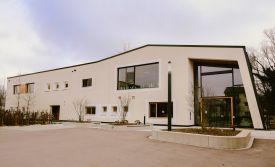
At our Schatzkiste in Lindau Zech, we accompany up to 116 children from their first steps to the start of school in our six groups. Our hearts beat for the treasures in each and every one of the children entrusted to us and their families. Together, we embark on a journey of discovery, encourage curiosity and self-confidence, and reach new horizons.

Rooms

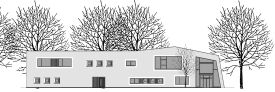
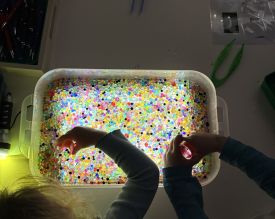
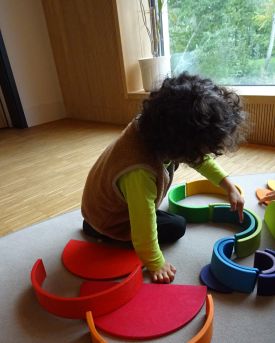
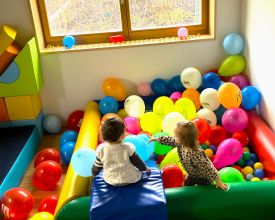
Each group is named after a gemstone and has its own group room with an adjoining side room or bedroom. The sanitary facilities are also directly accessible from the group room. In addition, all children have access to two activity rooms (ball pit and library), a multifunctional room (for gymnastics and sleeping), and a children's restaurant for shared use. All our adult visitors enjoy our parents' café, which invites them to linger and socialize. Our flexible team-room offers many possibilities for our dedicated employees to hold meetings, prepare for lessons, and to take breaks.

Outdoor Facilities

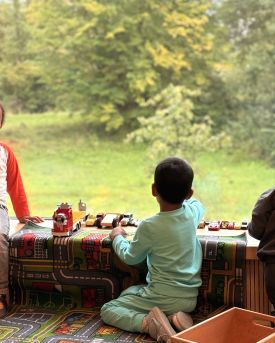
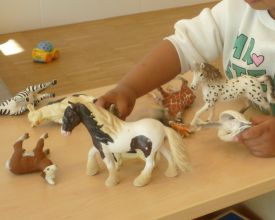
Nature is close to us even inside the building: the wooden walls, the natural colors, and the large windows overlooking the greenery of the nature reserve connect the indoors and outdoors. Children learn with all their senses, discover, marvel, and understand, especially when they are outside. Our garden serves as a living learning and experience space where children can experience freedom, movement, and closeness to nature. Together, we live out our thirst for discovery in the sandbox, in the hedges, and in the raised garden beds. We test our physical limits on the climbing frames and during soccer games, and we develop our very own fantastic role-playing games in the cozy little cabins.

Daily Schedule

The daily routine in educational work is particularly important because it provides structure and orientation. Children benefit from fixed routines which help them to estimate time and give them a sense of security. Through recurring activities, they experience reliability and develop independence and self-confidence, social skills, and basic life skills. In addition, a clear daily routine supports educational planning and enables targeted support for children in various areas such as creativity, movement, and language comprehension. We use our usual daily routine as a guideline and closely orient ourselves to the individual needs of the group in its actual implementation.

A typical daily routine in our nursery:

Depending on their booked time, the children are brought to their group by 8:30 a.m. at the latest. The children arrive and choose their games and playmates independently. In the morning circle, we greet each other, sing, play, and discuss current topics or plans for the day. We then eat the snacks we have brought with us together in the group room in a cozy atmosphere. Depending on individual needs, there is then time for specific activities, care, and free play. Before the first children are picked up, we explore nature, the garden, or go on an outing. We then enjoy our hot lunch together in the group room with great conversations and enjoyment. While the children who stay later get ready for their afternoon nap, there is another pick-up time. With soft music or lullabies playing, we snuggle into our beds and recover from the wonderful morning. Rested and recharged, some children are picked up. We enjoy the afternoon together with all the nursery groups in free play or in the garden and meet for an afternoon snack. Now the last children are picked up and look forward to spending the evening with their families.

A typical day at our kindergarten:

Depending on their booking time, the children are brought to their group by 8:30 a.m. at the latest. The children arrive and choose their games and playmates independently. In the morning circle, we greet each other, sing, play, and discuss current topics or plans for the day. Depending on how hungry they are, the children choose the right time for them to have breakfast in the children's restaurant. Depending on their individual interests, there is then time for specific activities, free play, and visits to the other groups. Before the first children are picked up, we explore nature, the garden, or go on an outing. We enjoy our hot lunch in a convivial atmosphere in the children's restaurant with great conversations and enjoyment. Depending on how much sleep they need, we spread out for a nap, a cozy rest, or quiet play and recover from the wonderful morning. Rested and recharged, some children are picked up. We enjoy the afternoon together with all the kindergarten groups playing freely or in the garden, and then we meet up for an afternoon snack. Now the last children are picked up and look forward to spending the evening with their families.

Food

A balanced diet is crucial for the development and health of our children – also in kindergarten. Good daycare catering must therefore do more than just fill stomachs: it should be healthy, respectful, sustainable, and affordable. We follow the DGE quality standard and focus on regional, seasonal products and the loving preparation of meals as moments of learning and community.

Care providers are responsible for all profile content. (State: 18/02/2026 12:42:34)

Basics

Children learn from and with each other in a social process in which adults and children participate actively and with an open mind. We are a learning community that enjoys discovering the treasures of this world. The children help shape this process and set the course for their own development.

Learning happens when we feel safe. That is why a positive and secure bond between the child and the teacher forms the basis of our work. We develop this bond gently and sensitively. Supported by a safe environment in their core group, the children feel secure and comfortable enough to approach the world and new things openly and learn.

Learning is successful when it is enjoyable and fun and when we are positive. By consistently focusing on our children's particular strengths, we keep their motivation and enthusiasm for learning high and use their individual skills to strengthen areas where they may be struggeling.

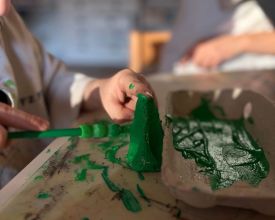
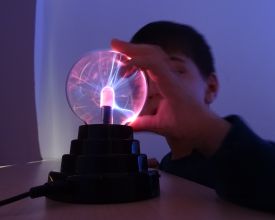
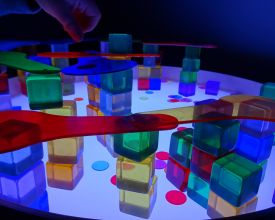
Sustainable learning takes place when we experience a topic holistically with all our senses, emotions, and forms of expression. Cross-disciplinary approaches, diverse forms of processing, and varied repetition stimulate the learning process in children again and again. “The more connections are made to a topic, the broader and more frequently a topic is addressed, the more successful the learning process in children will be.” (BayBEP p. 18)

Learning is enjoyable when it arouses curiosity, meets a current interest, or satisfies a need. At our Kinderhaus, we recognize that every person has their own needs and that these are allowed and acknowledged. In group activities, we learn about the needs of others and orient ourselves to the interests of the group or hold ourselves back from time to time. During our partially open phases and free play, we can follow our interests and participate in activities that appeal to us and trigger something within us.

We learn in a colorful way. Inclusion and diversity offer a valuable opportunity to shape education in a positive way. Differences, whether on an individual or sociocultural level, physical or mental level, encourage reflection and rethinking. Diversity within a community is a great asset, as it broadens horizons and helps children grow up to be tolerant and open-minded people. Our task is to create a differentiated educational offering and individual learning support that meets the needs of each child individually. Our goal is to develop an attitude that enables everyone—regardless of appearance, language, or origin—to feel that they belong to our community. Everyone is welcome here.

Employee

For education and learning to be successful, it is important to establish a trusting relationship with the children right from the start. We always treat children with kindness and respect. We interact with children and others in an appreciative and empathetic manner.

We are companions, inspirers, teachers, and learners for our children. Together, we grow in our development toward becoming self-confident and curious personalities. It is important to us that each child can develop individually and is met at their current level. At the same time, we are observers who support and encourage the children in their exploration. They should have independent learning experiences, as well as collaborative ones.

Qualification

Our main tasks are “planning and designing optimal conditions for educational processes that enable independent, individual, and cooperative learning in a sustainable manner” (BayBL p. 9). To fulfill these tasks, our team consists of specialists with a wide range of qualifications as educators, childcare workers, youth and residential educators, early childhood educators, daycare and after-school care managers, and pediatric nurses, and is complemented by our trainees, assistants, housekeeping staff, cleaning staff, and our caretaker.

We have formed special teams of experts for a wide range of topics within the facility, who contribute their knowledge to our work for the benefit of all colleagues. We see ourselves as a learning community that develops, asks curious questions, and continues to educate itself. This takes place in various ways, including individual training courses, coaching sessions, and team days.

Cooperations

Together we can achieve more: Collaborations are so important for our Kinderhaus because they enable our children to have new experiences and exciting encounters. When we collaborate with other institutions and experts, we open doors to additional learning opportunities, creative inspiration, and valuable support—so that every child can grow in the best possible way and every family can be well supported on their journey. To create this diversity of opportunities, we work with various partners who enrich us with their knowledge and services:

Teamwork with school

The transition from kindergarten to school is a big step for every child. We want this transition to be a success – and we achieve this together with parents and the elementary school. That is why we work closely together: children visit the school, get to know the classrooms and teachers, and teachers come to visit us at the kindergarten. This helps the children become familiar with their new environment and feel safe. For children who still need language support, there is special language support in the preparatory course, which takes place both in elementary school and at the kindergarten.

It is important to us that every child goes to school with joy, curiosity, and confidence – and we design our school preparation accordingly.

  • We strengthen self-confidence.
  • We promote the joy of learning and interest.
  • We develop a positive culture of learning from mistakes.
  • We advise on creative approaches to problem-solving.
  • We support independence and practical life skills.
  • We strengthen social interaction in a democratic society.

Teamwork with parents

The parents of our children are our equal partners, and we respect their role as their children's most important caregivers and experts. Through open and appreciative communication, we create an atmosphere of mutual trust and respectful cooperation.

In order to make our daycare center's daily routine needs-based and family-friendly, we want all families to actively participate and engage in a culture of open feedback. In addition to situational feedback in everyday life, we conduct a specific survey of parent satisfaction once a year. We use the results to regularly review and further develop our work, services, and processes. We take complaints, concerns, and criticism seriously and welcome them as a contribution to quality development.

Our services for parents and families are tailored to the different needs and life situations of our families and are therefore constantly evolving and customized. Overall, we want to accompany, empower, and support parents in their important and sometimes challenging role.

At parent-teacher conferences, information events, or through notices, we offer educational input and opportunities to strengthen parenting skills. In informal exchanges at parties or in the parents' café, we create opportunities to network with other parents and meet like-minded people in an open atmosphere. If necessary, we refer parents to experts, counseling services, or specialist agencies and provide support with bureaucratic challenges to the best of our ability.

We use a variety of methods to provide parents with comprehensive information about our educational goals, initiatives, and topics. Our working methods are transparent and easy to always understand. This gives parents reliable insight into their child's development processes and the measures we take to support them.

We also welcome active participation in our educational work. Parents are invited to get involved in projects, celebrations, or excursions and to join the parents' council. The parents' council is an important link between parents, staff, and the operators of our childcare center and is informed and involved in advance when important decisions are made.

Care providers are responsible for all profile content. (State: 18/02/2026 12:42:34)

News

That´s what our children think about treasures:

"Ein Schatz ist was Schönes, was mir gut gefällt."

"Schätze glitzern in der Sonne."

"Ein Schatz ist was Besonderes, was man findet zum Beispiel in einem Baumloch."

"Schätze macht die Natur - wie Gold - nur das ist sehr tief und schwer zu finden."

"Schätze können auch ganz normal sein, und für jemanden ist es ein Schatz."

"Menschen können auch Schätze sein, die passen aber nicht in einen Kasten - aber in ein Herz."

"Die Natur gibt uns Schätze."

"Das Kinderhaus ist auch ein Schatz."

Projects


Care providers are responsible for all profile content. (State: 18/02/2026 12:42:34)

Overview

Admission to the Kinderhaus is subject to the availability of space and group structures. If there are not enough spaces available, selection will be made according to the following priority levels:

  1. Children whose primary residence is in the city of Lindau (B)
  2. Children whose mothers or fathers are single parents and are working or in training
  3. Children who will be of school age in the next year of care
  4. Internal nursery children
  5. Siblings from the same institution
  6. Age of the children
  7. Proximity to place of residence/school district
  8. Desire to change
  9. Children whose primary residence is not in Lindau

Family emergencies can be taken into account in individual cases and considered when allocating spaces. To prove the urgency of the situation, appropriate documentation must be provided at the request of the educational staff.

Good to know:

For children up to three years of age, we apply

  • a minimum booking time of 3 days per week and
  • a maximum weekly booking time of 35 hours.

For children aged three and above, the following applies

  • a minimum booking time of 4-5 hours per day on average, or 20 hours per week, and
  • a maximum weekly booking time of 40 hours.
Care providers are responsible for all profile content. (State: 18/02/2026 12:42:34)

Description and Stations

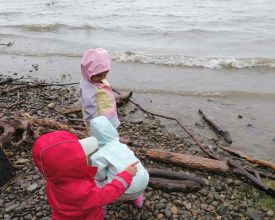
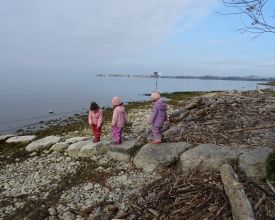
Surrounded by the forest, a river, and the lake, the Kinderhaus Schatzkiste's home is nestled in a residential area in the Zech district on the border with Austria. Just a few steps away from our facility is the Zechwald, a small forest that invites you to explore. A few meters behind our garden fence, the Leiblach river flows past our property and a little further on into Lake Constance, which we can also reach quickly on foot. The “Grenzsiedlung/Zech” city bus stop makes us easily accessible to all residents of Lindau, even those without a car, and also provides an important starting point for excursions throughout the city.

Care providers are responsible for all profile content. (State: 18/02/2026 12:42:34)

Maps are displayed only if you accept the corresponding cookies.
enable map