Basics
The educational approach at the daycare center lays the foundation for the holistic development of children ages one to three. During this sensitive stage of life, children are supported in a safe environment tailored to foster attachment, security, and the individual needs of each child. Our educational work is guided by a child-centered approach, which assumes that every child is an active participant in shaping their own development. Key areas of focus include language development, body awareness, fostering independence, and building resilience.
Language Development
The early years of life are crucial for language acquisition. At the daycare center, language development is specifically supported through a language-rich environment. Educators incorporate language support into daily activities by naming actions, engaging in conversations, and encouraging children to listen, understand, and repeat what they hear. Rhymes, songs, finger plays, and picture books are just as much a part of our language-rich daily routine as our METACOM cards, which further support communication and expand vocabulary.
Body Awareness
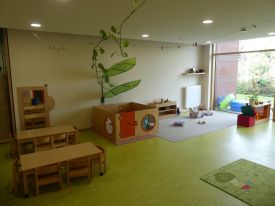
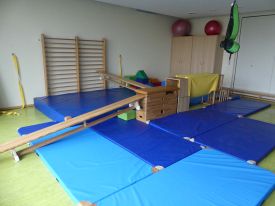
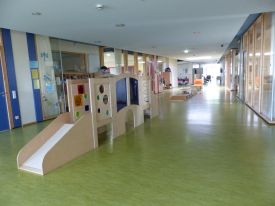
In early childhood, the perception of one’s own body and the joy of movement are closely linked to identity development. We create safe spaces where children can experience and learn to control their bodies through crawling, climbing, balancing, and free play. This not only promotes gross and fine motor skills but also strengthens body awareness. We support the children with sensitivity, provide opportunities for movement, and ensure an environment that invites discovery and experimentation without overwhelming them or intervening unnecessarily.
Independence
A central goal of early childhood education is to foster independence. Children should learn to make their own decisions, take on responsibility for age-appropriate tasks, and actively help shape their daily lives. This begins with everyday activities such as eating, getting dressed, or tidying up on their own. We give children the time, space, and trust they need to test and further develop their abilities. In doing so, they are not lectured but rather mindfully guided. This allows them to experience a sense of self-efficacy and develop healthy self-confidence.
Resilience
Resilience—that is, psychological resilience—forms an important foundation for healthy emotional development. At the daycare center, it is strengthened through stable attachments, reliable routines, and sensitive care. Children need secure caregivers who offer them guidance and protection and instill the courage to try new things and take on challenges. A positive culture of learning from mistakes, respectful support for their emotions, and encouragement to solve problems independently strengthen self-confidence and lay an important foundation for long-term mental health.
Conclusion
Pedagogy in daycare is far more than just childcare. It is educational work from the very beginning and creates the conditions for healthy development. The promotion of language, body awareness, independence, and resilience is achieved through the interplay of nurturing relationships, targeted educational activities, and a child-friendly environment. The focus is always on the individual child and their unique needs, interests, and potential.
Our Focus Areas:
Educational Partnership with Parents and Families
Observation and Developmental Documentation
Fostering independence and resilience to help children develop self-confidence and a sense of security
Rituals and Security
Active Daycare
Language Development
Free Play / Games / Social Interaction
Field Trips and Experiences in Nature
Nutrition, including a sugar-free morning
Toilet Training / Trust-Building Diaper-Changing Situations