
Kindertagesstätte RAMBAZAMBA

Für Kinder ab dem vollendeten zweiten Lebensjahr bis zur Einschulung

Address
Kindertagesstätte RAMBAZAMBA
C.-S.Schmidt-Straße 7a
56112 Lahnstein
Funding authority
Stadt Lahnstein
Kirchstraße 1
56112 Lahnstein
kita-rambazamba@lahnstein.de
02621/6274566
Opening times7:30 AM - 2:30 PM o'clock
Closing daysWerden Ende des Jahres immer für das kommende veröffentlicht
Foreign languages German
Specially educational concept open concept, open work
Extras Barrier-free, Pets, care with lunch, full day care

Current information

  • New opening hours as of 19 January 2026: Monday to Friday from 7:30 a.m. to 2:30 p.m.
  • As of 9 February 2026, the facility will only offer childcare for children aged two years and older

Introduction/specifics

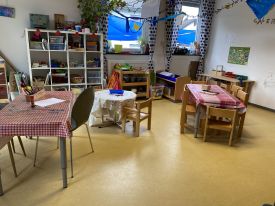
The team at the Rambazamba daycare center bases its educational approach on the concept of open practice. This means that the daycare’s play areas are divided into so-called functional rooms. The children are free to choose which room they want to be in and where they wish to pursue their play, building, and creative ideas, as a central principle of open practice is the experience of self-efficacy and community.

The daycare center is operated by the city of Lahnstein, and its catchment area is the municipal area.

The functional rooms accommodate 30 children aged two years up to school entry.
Care providers are responsible for all profile content. (State: 21/01/2026 14:11:52)

Basics

Open practice is an inclusive approach for all children in which no one is excluded. All children are able to participate and get involved, but they are not required to do so. The central aim of open practice is to make the experience of personal independence and shared responsibility tangible for both children and adults. Through open practice, children learn to form groups independently. So-called interest groups emerge, which make it easier to work together on topics of shared interest.

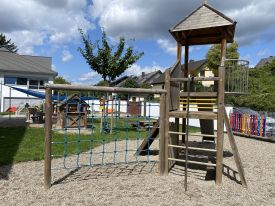
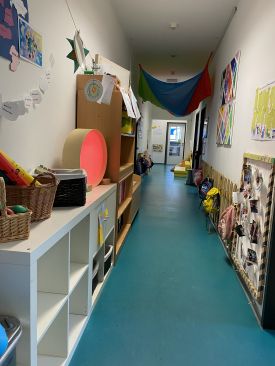
The daycare center’s rooms are divided into functional areas, including a movement room, creative room, construction room, Rainbow Room, play corridor, and outdoor area. In these spaces, children are free to move about and pursue their desire to play in an individual way.

In open practice, strong communication skills are essential for educators, parents, children, and all other educational partners. In addition, we place great importance on clear agreements and regular exchange of information. During open practice, children’s conferences—also referred to as committees—take place. In these, children experience democratic education by actively participating in joint decision-making and having a say in matters that concern them.


Teamwork with parents

An educational and parenting partnership describes a shared responsibility with the aim of developing methods and solutions that reflect and document the child’s individual developmental process.

We view parents as experts on their own child. They are the child’s most important attachment figures, which is why mutual exchange and trust are particularly important to us. The relationship between parents and educational professionals is one of the most essential foundations for successful educational and caregiving work. When parents feel well supported and valued in the daycare center, this feeling is passed on to their children and helps them build a trusting relationship with the educators. This has a positive impact on pedagogical work across all areas of development.

We appreciate support with organizational processes, the contribution of ideas, and the sharing of important information about changes in the children’s living environments. Of course, parents are welcome to observe our work at any time by visiting the daycare center in order to gain insight into our pedagogical practice.

Specifics

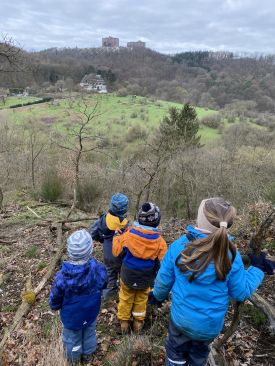
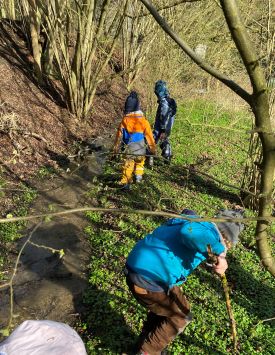
A fixed component of our kindergarten year is our nature experience weeks. During this time, we offer the children a variety of activities in nature in which they can participate. At the same time, they are also encouraged to follow their own interests, develop their own play ideas, and explore the forest as a space for play and living.

This period offers many opportunities for nature-based education and for observing and supporting the children’s development in a completely different environment. The children love this sense of freedom and develop in a very different way.

Care providers are responsible for all profile content. (State: 21/01/2026 14:11:52)