Kita Regenbogen

Address
Kita Regenbogen
Weiherstraße 28
72663 Großbettlingen
Funding authority
Gemeinde Großbettlingen
Schweizerhof 2
72663 Großbettlingen
kitaregenbogen@grossbettlingen.de
https://www.grossbettlingen.de/leben-wohnen/betreuung-bildung/kindertagesbetreuung/allgemeines
07022 4059428 (Herr Preußer)
Opening times7:00 AM - 2:00 PM o'clock
Closing days- Brückentage
- Weihnachten bis Heilig drei König
Foreign languages German, English, Italian, Portuguese, Romanian, Russian
Specially educational concept child oriented education, daily routine language education, inclusion, infans, intercultural education, livebased approach, open concept, open work, Emmi Pikler, project approach, Science/Project methods, Situation orientated approach
Extras Child care for physical education, Pets, care with lunch, cooperation facility, scientific orientation (e.g. KidsgoMINT)
Pets Gecko

Current information

Introduction/specifics

Rainbow Daycare Centre

"Education is not the filling of barrels, but the lighting of flames" - Heraclitus of Ephesus
In order to ignite the flames of each individual child, we see it as our task to find out exactly where we need to hold the match so that the spark of discovery can become a living flame. Together with the children, we go on a search, inform, explain, accompany and encourage them in their individual and collective educational processes.


Special features:

Education requires a bond: "Only if I can trust will I dare!"

If the child feels safe, accepted and in good hands, it can pursue its urge to explore with an open mind. Reliable caregivers, a regular daily routine, stability in the children's group and structured rooms that offer orientation are of great importance in educational work.

Due to the long opening hours, it is not always possible to have a caregiver around all day. This is why we attach great importance to offering the children reliable caregivers in our various areas when organising the duty rosters. This applies, for example, to early morning supervision, morning meetings with the different age groups, in the rooms, when eating, sleeping, resting and so on.

The accompanied transition from the toddler area to the big house is of particular importance in our daycare centre

Children need peers. But they are naturally also interested in what the "grown-ups" can already do. The older ones are admired and are important role models who favour learning by example. We are always looking for ways to enable our children to make excursions from the toddler area into the world of the grown-ups. This should support their joy of discovery as well as facilitate the later transition. It is important to us to offer the children mutual permeability between all age groups.


Rooms

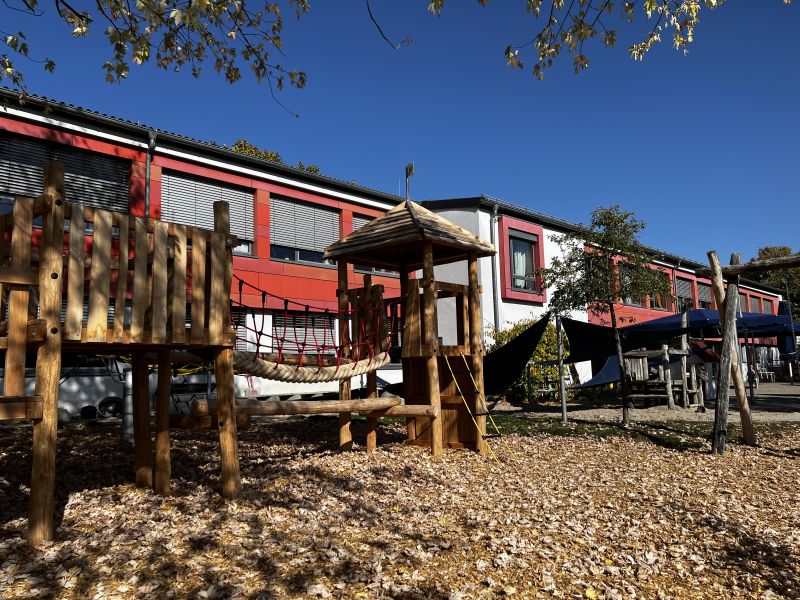
In the former primary school building, our centre has been adapted to the needs of children aged 1-6 according to the "Hamburg room design concept". The large, well-organised educational rooms offer plenty of space for up to 100 children. The design of the facility is based on the fundamental idea of our educational concept, which emphasises the importance of children's self-education processes. We always actively support the children in a stimulating environment.


Daily Schedule

Daily Routine 3+ (Ü3)

Structures and rituals in the daily routine help children to organize the many impressions they experience and make them easier to understand. This contributes to children feeling safe and increasingly able to move independently.

07:00 – 09:00 – Arrival at the daycare

At 7:00 a.m. we open our doors for the early birds. Usually, children aged 1–6 come together here, allowing them to make cross-age contacts right from the start.

During arrival time, there is an opportunity for a brief exchange about special events or your child’s well-being. Shortly after 8:00 a.m., the rooms on the upper floor are opened and freely accessible to all children.

07:00 – 10:30 – Open breakfast

The children decide independently when and with whom they would like to enjoy their breakfast. Fresh fruit and vegetables prepared by the children are available on the table every day. They set their own place and clear their dishes afterwards. Our youngest children are accompanied and supported during breakfast.

09:00 – 09:15 – Short morning circle

Once all children have arrived, we begin our morning circle together. We start with a song, then discuss the daily schedule, upcoming activities, projects, and any matters close to the children’s hearts.

09:15 – 09:45 – Cross-age project work / age-homogeneous morning meetings

From Monday to Wednesday, age-specific morning meetings take place where current topics of each group are addressed. The “Frogs” group (a link between the toddler area and the older children’s house) meets daily in their age group for circle games, singing, making music, and small projects.

From Thursday to Friday, it’s project time. Topics suggested by individual children or small groups are taken up and made accessible to other interested children. Together, the children search for answers, develop plans, and implement ideas. Educators accompany and support them when needed.

09:45 – 12:00 – Free play in our activity areas and in the garden

Children learn with and from each other. In free play they can connect with friends, explore their own interests, and pursue their ideas. Play experiences in a rich, stimulating environment provide the foundation for understanding complex relationships.

Pick-up times: Depending on your child’s booking schedule, children are picked up and escorted to the gate at 12:00, 13:00, and 14:00.

Lunch: Our lunch is delivered by Apetito. Mealtime is ritualized and offers many opportunities for independence. To ensure a calm atmosphere, children eat at two different times:
Children who nap eat at 11:00 a.m. as a closed group. They have their own sleep room with personal blankets, pillows, and pictures made by their parents. They can get comfortable with their cuddly toy. An educator is always nearby during nap time to provide a sense of security.

Children who only rest may decide for themselves when they are hungry and with whom they want to eat. Afterwards or during this time, we offer calm activities such as bead art, quiet table games, or picture book exploration. Some children choose a cozy spot to rest and process the impressions and experiences of the morning.

We always do our best to offer the children a structured daily routine that provides safety and orientation. However, the times listed are approximate and depend on the group situation and staff availability.


Daily Routine Under 3 (U3)

Structures and rituals in the daily routine help children organize the many impressions they experience, making them easier to navigate. This helps children feel safe while becoming increasingly independent.

07:00 – 09:00 – Good morning in our house

At 7:00 a.m. we open our daycare doors. At first, we gather together in the early-service area. Due to the mixed-age group at this time, our youngest children establish cross-age contacts from the beginning and get to know the first rooms and educators from the older children’s area. An educator from the toddler area ensures a familiar atmosphere during the handover and may transition to the toddler area earlier if needed. By 7:40 a.m. at the latest, we all move to our designated rooms. During arrival time, there is an opportunity for a brief exchange about special events or your child’s well-being so that we can start the day well together.

From 07:00 – Open breakfast

The children decide when, with whom, and where they would like to enjoy their breakfast. They are closely supported by the educators and encouraged in their natural drive toward independence.

07:00 – 11:00 – Free play, activities, impulses, exploring the rooms, garden time …

The children experience our rooms as a safe retreat. Throughout the day, they have many opportunities to pursue their contacts, interests, and personal projects. Both independent and guided exploration, discovery, and experimentation in a rich, stimulating environment lay the foundation for understanding complex concepts. During free play, there is also plenty of time for singing and making music. In this social setting, children learn with and from each other. Depending on the group’s needs and interests, short activities such as sensory experiences, color sorting, and more are offered. This way, they become familiar with certain games, songs, and rules even before transitioning to the older children’s house. Children may choose whether they would like to participate in these activities.

11:00 – 12:00 – Morning children (pick-up at 12 p.m.)

After free play, the children go on a discovery tour with a toddler-area educator into the older children’s house or into the garden. The morning ends with a shared closing circle featuring finger plays and songs.

11:00 – 14:00 – Lunch and sleep time

Lunch is delivered by Apetito. The children learn to enjoy a wide variety of dishes and become increasingly confident and independent using cutlery. The duration of lunchtime depends not only on the food served. If children become tired and express a desire to go to bed during the meal—or even fall asleep while eating—they are immediately accompanied to the sleep room. The falling-asleep phase is supported individually. Some children only need to know that an educator is nearby or hold a cuddly toy, while others may need a hand or gentle strokes.

 

Care providers are responsible for all profile content. (State: 29/04/2026 10:45:56)

Basics

We implement the Baden-Württemberg orientation plan, in which the educational mission is concretised, with the help of the "infans" action concept. The positive view of the child as well as the organisation of early educational processes form the basis for this concept and lead to continuous further development. The aim is to provide the children with a framework in which they can develop all their characteristics, talents, resources and strengths in our open-plan centre.

Employee

As colourful as a rainbow, our team is made up of educational specialists, PIA trainees and FSJ trainee! Our work focusses on one thing above all: your child and his or her individual support.

Our daycare centre manager, Mr Sebastian Preußer, and deputy manager, Ms Lidia Preisner, are primarily responsible for this. Their door is always open for all questions, comments and concerns from children, parents, carers and staff. Their areas of responsibility include the organisation and content of the daycare centre. They are also responsible for ensuring consistently high quality childcare, staff development and close cooperation with parents and carers.

Collegial and professional dialogue takes place in regular team meetings, discussion times and pedagogical days. Our expert team takes advantage of the wide range of opportunities for regular training and further education. This ensures that all employees are able to contribute their strengths and professional qualifications to everyday life. An everyday language support worker supports the entire team with suggestions, ideas and projects. As a training centre, we support and accompany various interns and pupils during their training. Two housekeepers and a caretaker round off the staffing.

Cooperations

Cooperation with the Großbettlingen gymnastics and sports club

Since 2015, gymnastics lessons have been held once a week for 3- to 4-year-olds together with trainers from TSuGV Großbettlingen. The Württemberg State Sports Association supports cooperation between sports clubs and daycare centres with the special project "Kindergarten & Sports Club Cooperation". The aim is to promote the children's motor, cognitive and social-emotional development as well as their personality. Sport should also be perceived as enjoyable and meaningful. This also applies to children who previously had little affinity with sport and exercise. Funding is available for measures that are carried out jointly by the sports club and the day care centre. The funding is based on an invitation to tender in which the criteria for funding are set out.

Teamwork with school

Primary school cooperation

The cooperation between nursery school teachers and teaching staff is based on equal footing and offers very flexible organisation options thanks to its close proximity to the local primary school. In the cooperation, the so-called Bildungshaus, the future first-graders gain their first impressions and experiences of everyday school life in the last year of kindergarten. Once a week, (January - June) they spend part of the morning together with their co-operation class in the playground and in school lessons. Accompanied by their teachers and class teachers, they can get to know the premises, the older children and the other teachers in a safe and secure environment. Through close dialogue and agreements between teachers and kindergarten teachers, the kindergarten children are integrated into the classroom and lessons with age-appropriate tasks. This cooperation enables the children to make a smooth transition from kindergarten to primary school and helps to avoid anxiety. The children start their first day at school with strength and confidence and thus a new chapter in their lives.

Teamwork with parents

Parents or other carers know their child best. A mutual and trusting exchange is important and valuable for everyone. That's why we take the time to get to know each other individually and have regular dialogue. Door-to-door discussions are just as valuable as targeted parent-teacher conferences, which take place as required, but at least once a year. Our documentation in the portfolios, which are accessible to parents and carers at all times, serves as the basis for this. You will be informed about various topics and the latest news at parents' evenings. We are always happy to receive questions, suggestions and ideas from parents and carers. Individual drop-off and pick-up times offer families little space for encounters. We organise various activities to enable them to get to know each other and exchange ideas.

Specifics

Certification of day care centre with a focus on sport and movement education

The vocational school for social pedagogy at the Fritz-Ruoff-Schule Nürtingen has been recognised as a motor skills centre in Baden-Württemberg by the Stuttgart Regional Council. For this reason, it has the opportunity to award kindergartens that are particularly concerned about their children's world of movement with the certificate "Day care centre with a focus on sport and movement education".

Following the successful examination and assessment of the specified criteria, we received the first award in 2012. Every three years, a representative of the motor skills centre visits the centre to check that the award criteria are being met. We are delighted to have received this certification for the fourth time in a row thanks to our daily exercise time, suitable premises, a trained exercise instructor, regular training for our teachers and our focus on healthy eating.

"House of Little Scientists" certification

Thanks to the "Ohrenspitzer in der Kita" project, our facility was awarded the "Best Practice Prize" by Forschergeist 2012 and received certification as a "Haus der kleinen Forscher". In 2022, we were able to fulfil the requirements for the 4th follow-up certification once again.

EMIL - learning to regulate emotions

With "EMIL", the ZNL Transfer Centre for Neuroscience and Learning Ulm has developed a kindergarten concept that has been tried and tested in practice and successfully evaluated. Our educational staff are familiar with this concept and apply it daily in the centre.

JolinchenKids - fit and healthy in the daycare centre

JolinchenKids is a nursery programme from the AOK that promotes the health of children up to the age of six. The programme focuses on nutrition, exercise and mental well-being. JolinchenKids introduces children to the joy of exercise and healthy eating in a playful way. Additional information is also provided to support educators and help to make health an exciting topic for children.


Care providers are responsible for all profile content. (State: 29/04/2026 10:45:56)

News

Dates:

  •  23.09.2026 at 6 p.m. Information evening for interested parents - registration is requested 

Closing days daycare centre year 2026/2027

  • 15.05.2026 Bridge day 
  • 20.05.2026 Pedagogical day 
  • 05.06.2026 Bridge day 
  • 09.11.2026 First-aid course
  • 23.12.2026 - 10.01.2027 Christmas holidays
  • 17.03.2027 - 19.03.2027 Pedagogical days
  • 07.05.2027 Bridge Day
  • 28.05.2027 Bridge Day
Care providers are responsible for all profile content. (State: 29/04/2026 10:45:56)

Maps are displayed only if you accept the corresponding cookies.
enable map