Ev. Kinderhort St. Michael

Kinder im Grundschulalter

Address
Ev. Kinderhort St. Michael
Kirchenplatz 6
90762 Fürth
Funding authority
Evang.-Luth. Kirchengemeinde St. Michael
Pfarrhof 3
90762 Fürth
hort.kirchenplatz.fue@elkb.de
https://www.kita-bayern.de/fue/hort-kirchenplatz/index.html
0911 779622 (Herr Krüger)
Opening times8:00 AM - 5:00 PM o'clock
late care4:30 PM - 5:00 PM o'clock
Closing daysWir schließen am Freitag um 16.30 Uhr.
Foreign languages German
Denomination evangelic
Specially educational concept partially open concept, Situation orientated approach
Extras care with lunch

Introduction/specifics

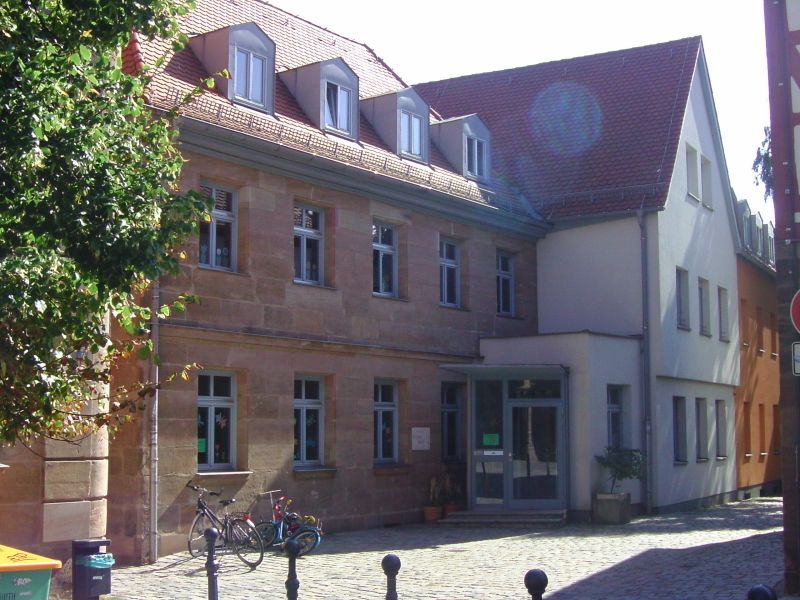
Our St. Michael Evangelical Children's Daycare Center is located in the heart of Fürth's charming old town. The St. Michael Evangelical Lutheran Parish offers parents a special childcare program for their children. From a nursery and kindergarten to after-school care, including schooling at the nearby elementary school on Kirchenplatz, children can experience continuity and security for up to 10 years.

Rooms

Our Protestant after-school care center is located in a two-story building. Each floor has a group room with a kitchenette, a homework room with a cloakroom, and a toilet. The center's kitchen and dining area are located in the basement. There is also a workshop and several storage rooms there. Our multi-purpose room with a small lounge area, providing a quiet retreat for the children, is located on the top floor.

Outdoor Facilities

The children can use the courtyard independently. The after-school care garden is located adjacent to the school, set back between the school building and house number 3. With its sandbox and mud area, it offers a variety of opportunities for play and creativity, while a climbing frame, table tennis, foosball, and trampoline provide opportunities for physical activity or relaxing in a hammock. A large walnut tree provides shade and rewards us with its fruit every year.

Daily Schedule

The children come to us after school. They can have lunch, do their homework with the support of our staff, try out a variety of games and creative activities, nurture their friendships, and participate in activity groups and excursions. We celebrate festivals together and plan holiday activities with the children.

Food

Every child receives lunch at the after-school program. Vegetarian options are available. Lunch is served in three shifts (depending on when the children finish school). Each child decides for themselves whether and how much they want to eat. In the afternoon, fruit or vegetables are often offered as a snack. Our caterer is "Chef Happy" from Fürth.

Care providers are responsible for all profile content. (State: 28/04/2026 19:57:18)

Basics

Legal Framework Our institution operates according to: Federal law SGB VIII, which includes the Child and Youth Welfare Act (KJHG) Agreement between independent providers and the City of Fürth Bavarian state law BayKiBiG and is based on the BEP (Berlin Education Plan), and the UN Convention on the Rights of the Child Responsibility for implementation and compliance lies with the provider.

Employee

The after-school care staff includes three educators, a second pedagogical staff member, and a kitchen assistant.

Qualification

Lower Group After-School Care Center Director: State-certified early childhood educator with additional qualification as a specialist in education Deputy Staff Member: State-certified early childhood educator Upper Group: Deputy Director and Group Leader: State-certified early childhood educator Deputy Staff Member: Childcare worker


Additional Offerings

Childcare during the school term Childcare for up to 9 weeks during school holidays

Quality Assurance

Team: Evaluation and Reflection on Pedagogical Work within the Team / Review and Development of the Concept In weekly team meetings, we prepare for the weekly, monthly, and yearly pedagogical planning. We exchange information on new developments and current topics, conduct case discussions, develop methods, reflect on and evaluate our work and behavior, and build upon this to achieve our pedagogical goals. To do this work effectively, we strive to live according to our self-developed "Spirit of the House" concept. Furthermore, we organize celebrations, excursions, and professional development days. Once a year, we hold a planning day to update our concepts on child protection, media, and our institution-specific pedagogical concept.

To do our work well, we strive to live according to our self-developed "Spirit of the House" concept. We also organize celebrations, outings, and professional development days. Once a year, we hold a planning day to update our policies on child protection, media literacy, and our institution-specific educational approach. Parental Survey Once a year, parents receive a questionnaire that can be completed anonymously. Parents evaluate our educational work, room design/equipment, meals, activity groups, holiday program, end-of-year outing/evening, and parent council, and can express their opinions, needs, wishes, and criticisms. The parent questionnaire is evaluated by staff and posted on the information board. It is a necessary quality standard and serves to ensure the quality of our educational work.

Children's Survey Once a year, an anonymous children's survey is conducted. Children share what they like and dislike about the staff and what could be improved. Once a month, children have the opportunity to voice their wishes and concerns at the children's conference. This can also be done anonymously via the conference suggestion box. In addition, there is a children's consultation hour. During this time, children can listen to the concerns of a staff member and experience their confidentiality. A complaint box with a pre-printed form is available for the children. Complaints are discussed with the children involved as soon as possible.

Employee Survey An annual employee review takes place once a year. During this review, the work situation, well-being, and employee wishes are discussed. The goal is to foster a positive and stable work environment, job satisfaction, and overall job satisfaction. Professional Development and Training Each employee is entitled to six days of professional development per year. They have both the right and the responsibility to participate in professional development and training. Participation in training should be stimulating, provide new insights, and expand and deepen knowledge. First Aid Course Every two years, all employees complete a first aid refresher course.

Specialist Advisory Service The specialist advisory service provides us with pedagogical assistance and support, offering expert advice and practical help. Four times a year, the specialist advisory service invites all after-school care center directors to an exchange of ideas. Management Conferences The specialist advisory service and the Youth Welfare Office organize events. These cover legal changes, information on the Bavarian Childcare Act (BayKiBig), and other updates.



Cooperations

Collaboration with St. Michael's Kindergartens Representatives of the sponsoring organizations and directors of the St. Michael's facilities meet regularly for joint discussions (legal updates, pedagogical and organizational issues, closure days, and the planning of celebrations and church services). We benefit from each other and enrich one another. Open All-Day School We maintain open communication and support each other. Counseling Centers and Youth Welfare Office When needed, the after-school care staff refers parents to appropriate counseling services such as parenting advice centers, pediatricians, occupational and speech therapists, and child psychologists. The Youth Welfare Office serves as a point of contact for us and the parents regarding various family, personal, and educational questions and needs, and helps to clarify these issues. Parents can apply for a subsidy for after-school care costs from the Youth Welfare Office if their income exceeds a certain threshold. With other after-school care centers at the deanery level The directors of the after-school care centers meet at least three times a year. The managers provide each other with collegial advice, exchange information, benefit from mutual experiences and support each other when needed.


Teamwork with school

Collaboration with the School The shared mission of the school and the after-school care program to educate and nurture children requires close cooperation and coordination between both spheres. This is legally enshrined in Section 81 of the German Social Code, Book VIII (SGB VIII) and Article 31 of the Bavarian Education Act (BayEUG). To keep the learning and living environment of the children in the after-school care program in focus, we organize a meeting with the teacher once a year. Our primary concern is the child's well-being. In discussions with the teacher, we identify ways to help, support, or further guide the child in their current situation. The agreed-upon approach is documented.


Teamwork with parents

1. Goals and Forms of Cooperation / Parent Evenings / Developmental Discussions We see our after-school care center as a supplementary and supportive institution for families. Our approach is characterized by mutual acceptance and tolerance. Through open and trusting cooperation, we aim to focus on the well-being of the children in partnership with parents. Good educational work can only succeed through collaboration between parents and staff. This requires open communication, perseverance, and a willingness to compromise. Institution-specific forms of parent involvement: Intake interviews Parent meetings Phone calls Informal conversations Parents' evenings Letters and emails Information posted These methods serve to establish and maintain contact.Family-oriented forms of parental involvement: Joint activities (festivals, church services, family picnics) These activities foster interaction and mutual understanding. Parent involvement: On the parent council During staffing shortages Taking on organizational tasks (trampoline maintenance, sand replacement, event planning) Family-supporting forms of parental involvement: Open communication sessions Consultation sessions Collaboration with social services (youth welfare office, family counseling center, district social services) Referral to specialized support and enrichment programs Parents' evenings A parents' evening is held at the beginning of the school year, coinciding with the election of the parent council. Parents and staff get to know each other. Information about daily life at the after-school program and existing regulations is provided. Concerns, needs, wishes, and suggestions can be raised. Upon request, a parents' evening on an educational topic is held in the second semester. Development meetings A development meeting is offered once a year. During these meetings, the child's developmental stage, well-being, socialization, strengths and weaknesses, homework situation, and an overview of their daily routine at the after-school care center are presented/discussed. We invite parents to a parent-teacher conference for specific events.

2. Parents' Council At the beginning of the after-school care year, the parents elect a parents' council. This council consists of three members and at least three alternates. The parents' council is responsible for promoting cooperation between parents, teaching staff, the sponsoring organization, and the primary school. To fulfill this role, the parents' council has the right to information and consultation. The parents' council provides support for events, community activities, and maintenance and renovation projects (end-of-school care evening, sand replacement, Advent bazaar).


Specifics

The St. Michael Evangelical Children's Daycare Center offers families extended childcare options (after attending crèche and kindergarten) in the familiar and peaceful surroundings of St. Michael's Church in the old town. After finishing school at Kirchenplatz School, your child can walk independently to the daycare center and receive four more years of loving care in a safe and nurturing environment.

Care providers are responsible for all profile content. (State: 28/04/2026 19:57:18)

Holiday Care

During most of the school holidays (9 out of 14 weeks), we offer childcare with a variety of activities in the following areas:

Culture = Museums, art gallery, Bible museum, cinema, theater

Sports = Playing outdoors, soccer, inline skating, hiking, climbing

Creativity = Sensory exploration, arts and crafts, land art

Nature = Forest playground, wild boar enclosure, farm, forest During this time, children can experience the after-school program for longer, more intensively, and in a more diverse way.

One example is the after-school scavenger hunt: The children go on a treasure hunt in small groups and have to work as a team. They solve tasks to reach their destination. In doing so, they develop their sense of direction, get moving, experience their surroundings, and search for solutions. When they reach the destination together, they experience a sense of accomplishment. The joy and fun of doing things together create a positive feeling.


Homework Support

After lunch, the children begin their homework independently and responsibly. They choose their own place and method (sitting, standing, lying on a mat, with noise-canceling headphones) to complete their homework. Homework is checked randomly. If there are any questions or missing assignments, the staff writes a note in the student's notebook for the parents and teachers. Responsibility for homework rests primarily with the child and ultimately with the parents/guardians.

The teaching staff sees themselves as supporters and helpers of self-help. When the children are feeling down, they motivate, comfort, and encourage them.

Brief explanation regarding homework:

Homework serves to review, practice, and reinforce the material learned. Homework time is typically about one hour. Staff decide individually whether additional time is needed. We refer to the school regulations for elementary school students, which stipulate one hour of focused work. We practice this by using a clock or alarm clock to estimate the time.

The rationale from an educational perspective is as follows: Children should learn to organize their work steps effectively. Children should not be overburdened. Homework lasting longer than an hour is sometimes ineffective and tends to cause negative experiences. This is also not in the school's interest. The teacher should be able to recognize whether the children have understood the tasks.

The after-school program cannot provide tutoring for schoolwork. Lengthy explanations would block the other children, who only need brief assistance to continue working independently. The children complete their homework for the day first. If there is still time, they can then finish any unfinished schoolwork (or assignments completed while sick).

If a child forgets their learning materials (book, worksheet, etc.), these will be made up the next day. This is perfectly fine and has been arranged with the teachers. The child's sense of responsibility is strengthened, as reliability and organizational skills are required.

If a child is feeling unwell or experiencing a mental slump, we stop their homework and write a note in their student notebook for the parents and teacher. We include information and send letters to parents.

We use our 10-stamp system as a "positive reinforcement model." If the children complete all their written homework neatly, legibly, and within a reasonable timeframe, they receive a stamp. Once they have 10 stamps, the child lets us know and can then choose a treat from the surprise box or skip their weekly chore.


Parental Interviews

Once a year, parents receive a questionnaire that can be completed anonymously. Parents evaluate the educational work, room design/equipment, food, activity groups, holiday program, end-of-year trip/evening, and parent council, and can express their opinions, needs, wishes, and criticisms. The parent questionnaire is evaluated by staff and posted on the information board. It is a necessary quality standard and serves to ensure the quality of our educational work.

Care providers are responsible for all profile content. (State: 28/04/2026 19:57:18)

Maps are displayed only if you accept the corresponding cookies.
enable map